
Parenting Support
Parenting sometimes involves more work than pleasure. Although very rewarding, you are responsible for your children until they become adults. As most parents agree, taking care of a child and his or her many, many needs can often be physically and emotionally exhausting. Sometimes a bit of extra support is welcome.
On this page you will find access to parenting programme information, and a range of links to websites and organisations that can help you with the daily challenges of just being a parent.
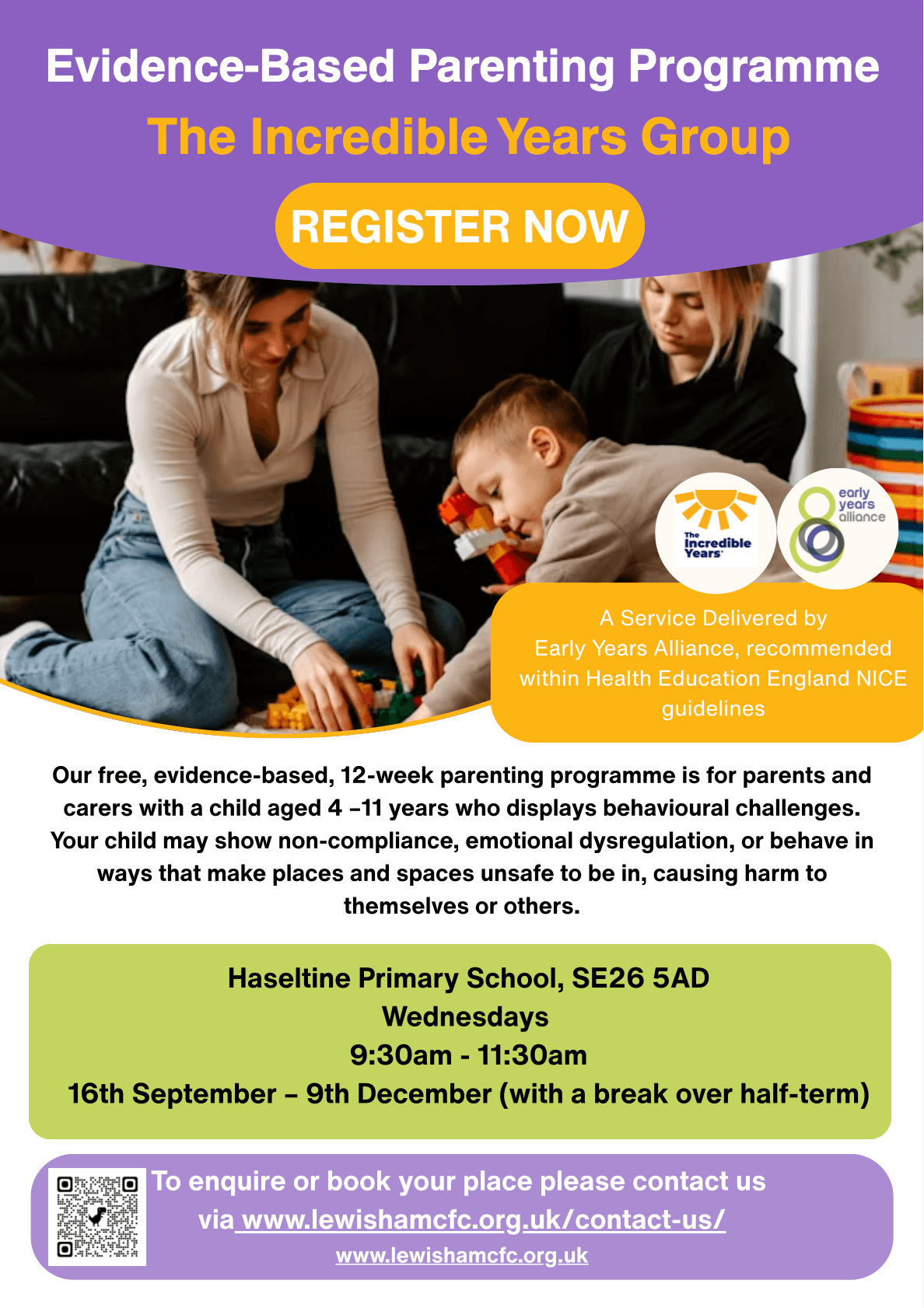
Early Years Alliance deliver a range of Therapeutic Parenting Programmes that support parents to meet their child’s needs and improve behaviour. Our range of group and 1:1 sessions support parents to build a more positive relationship with their child and help them to understand their behaviour. We work with parents who are concerned their child may have ADHD, or behaviours that make places and spaces unsafe to be in, or cause serious harm to themselves and others for children with:
- serious, high risk or distressing behaviours
- conduct disorders
- oppositional defiance disorder
- and where ADHD is suspected or diagnose
Parents and professionals: For further information on our programmes, or to enquire about our upcoming courses please email Lewisham.Secure@eyalliance.org.uk
Professional refer using this downloadable referral form: please complete fully and email to Lewisham.Secure@eyalliance.org.uk
Incredible Years®
Building Strong Relationships Through Positive Parenting
The Incredible Years programme is an internationally recognised, evidence-based parenting intervention that supports parents to strengthen their relationship with their child and develop effective strategies for promoting positive behaviour.
The programme focuses on helping parents understand the reasons behind behaviour, build emotional connections, and develop practical skills for responding to challenging situations calmly and consistently.
Parents attending the programme have the opportunity to learn alongside others facing similar experiences, creating a supportive environment where ideas, challenges, and successes can be shared.
Topics include:
- Strengthening parent-child relationships
- Encouraging positive behaviour through praise and play
- Developing effective routines and boundaries
- Managing difficult behaviour calmly and consistently
- Supporting children’s emotional regulation
- Building children’s social and problem-solving skills
Who is the programme for?
Parents and carers of children experiencing behavioural, emotional, or relationship difficulties.
Delivery:
- Group-based intervention
- Weekly sessions
- Typically 12–14 weeks
- Delivered by accredited practitioners
Outcomes:
Families often report increased confidence, improved relationships, reduced conflict, and greater enjoyment of family life.
💬 Why does Incredible Years work?
The programme is based on decades of international research.
Rather than focusing on punishment, it helps parents:
- notice positive behaviour
- strengthen attachment
- coach emotions
- use praise effectively
- set consistent boundaries
- solve problems together
Parents practise skills each week and gradually build confidence.
Parent Tip
Children are much more likely to repeat behaviours that receive positive attention.
Even five minutes of uninterrupted play each day can strengthen your relationship.
📖 Learn More
The programme is based on principles of:
- attachment
- social learning theory
- child development
- emotional coaching
Incredible Years Autism (ASC)
Supporting Parents of Neurodivergent Children
The Incredible Years Autism Spectrum and Language Delays programme has been specifically adapted for parents of autistic children and children with social communication differences.
The programme recognises the unique strengths and needs of neurodivergent children and supports parents to better understand communication, emotional regulation, sensory needs, and behaviour.
Parents are provided with practical strategies that can be tailored to their child’s individual profile while connecting with other families who share similar experiences.
Topics include:
- Understanding autism and communication differences
- Supporting emotional regulation
- Promoting social interaction and play
- Developing routines and transitions
- Managing sensory needs
- Encouraging independence and daily living skills
Who is the programme for?
Parents and carers of autistic children or children with social communication needs.
Delivery:
- Group-based intervention
- Weekly sessions
- Approximately 14 weeks
- Delivered by trained facilitators
Outcomes:
Parents often report feeling more confident, less isolated, and better equipped to support their child’s development.
Understanding Neurodiversity
Autistic children experience the world differently.
The programme recognises that behaviour often communicates:
- sensory overload
- anxiety
- communication needs
- uncertainty
- fatigue
Rather than asking
“Why is my child behaving like this?”
parents learn to ask
“What is my child communicating?”
💡 Pop-up: What is sensory regulation?
Many autistic children experience the world more intensely.
Sounds, Lights, Textures, Busy environments, Unexpected changes may all affect how a child feels and behaves.
Understanding sensory needs often reduces distress.
Personalised Individual Parent Therapy (PIPT)
Understanding Relationships to Create Change
PIPT provides a safe, reflective therapeutic space for parents to explore their relationships, experiences, and parenting journey.
Sometimes past experiences, stress, trauma, or difficult life events can affect family relationships. PIPT supports parents to understand these experiences and consider how they may influence current parenting and family dynamics.
The intervention is tailored to each family’s needs and delivered in a compassionate, non-judgemental way.
Areas of support may include:
- Parent-child relationships
- Attachment and bonding
- Emotional wellbeing
- Loss, trauma, or difficult life experiences
- Understanding patterns in relationships
- Building parental confidence
Who is the programme for?
Parents requiring more intensive, therapeutic, or individualised support.
Delivery:
- One-to-one sessions
- Flexible delivery
- Tailored to family needs
Outcomes:
Families often report improved relationships, increased insight, and greater emotional wellbeing.
Why Relationships Matter
Children learn about relationships from their caregivers.
Sometimes our own childhood experiences influence how we respond to stress, conflict or behaviour.
PIPT offers a safe space to reflect without judgement.
The aim isn’t to blame parents.
It’s to understand patterns and build healthier relationships.
Guided Self-Help (GSH)
Small Changes Can Make a Big Difference
Guided Self-Help is a structured, evidence-informed intervention that supports parents experiencing mild to moderate emotional or parenting difficulties.
Working alongside a practitioner, parents are supported to identify goals, develop coping strategies, and build confidence in managing challenges.
The intervention is practical, goal-focused, and designed to empower families to develop sustainable solutions.
Areas covered may include:
- Stress management
- Anxiety and low mood
- Problem solving
- Building resilience
- Parenting confidence
- Goal setting and action planning
Who is the programme for?
Parents experiencing mild to moderate difficulties who would benefit from short-term support.
Delivery:
- Individual sessions
- Typically 6–8 sessions
- Structured and goal-oriented
Outcomes:
Parents often report increased confidence, improved wellbeing, and greater ability to manage everyday challenges.
Why parental wellbeing matters
Parents cannot always pour from an empty cup.
Looking after your own wellbeing benefits your child too.
All programmes are delivered by trained practitioners using evidence-based approaches.
- Understand the impact of trauma, neglect, and adverse childhood experiences (ACEs).
- Build secure attachment relationships that support emotional development.
- Respond to behaviour through a therapeutic rather than punitive lens.
- Co-regulate and support emotional regulation in children and young people.
- Strengthen consistency, boundaries, and relational safety within the home.
- Improved attachment security and emotional regulation in children.
- Reduced placement breakdown and family stress.
- Improved parent confidence and reduced isolation.
- Better long-term outcomes in education, behaviour, and wellbeing.
- Improve communication and reduce entrenched conflict.
- Understand patterns that may be impacting relationships.
- Strengthen attachment and emotional connection.
- Navigate trauma, loss, separation, and life transitions.
- Support children and young people experiencing emotional or behavioural distress.
- Improved emotional wellbeing for children and parents.
- Reduced behavioural difficulties and family breakdown.
- Better engagement with education and services.
- Increased resilience and long-term relational stability.
OTHER PARENTING PROGRAMMES IN LEWISHAM
A range of other parenting programmes are available in Lewisham, such as Triple P, Triple P for Babies, EPEC and NVR.
For details of these and other parenting programmes running in Lewisham see the Family Hubs website.
Sometimes, a small change in how we respond to our children can make a big difference. The videos below introduce some of the key concepts that underpin the parenting programmes delivered by the Early Years Alliance.
What is Attachment?
Attachment describes the emotional bond between a child and their caregiver.
Secure attachment helps children:
- manage emotions
- develop confidence
- explore safely
- build healthy relationships
Attachment develops through thousands of everyday interactions—not through being a perfect parent.
Why is parenting support important?
Research consistently shows that the quality of the parent-child relationship is one of the strongest predictors of a child’s future emotional wellbeing, mental health, behaviour, and educational success.
Positive parenting helps children to:
- feel safe and secure
- develop healthy relationships
- regulate their emotions
- build confidence and resilience
- succeed at school
- develop independence
Parenting support isn’t about being a “better parent”—it’s about giving families practical tools that make everyday life easier.
Stress and Parenting
When we’re stressed, our brains naturally switch into survival mode.
This can make it harder to:
- stay calm
- solve problems
- listen
- manage behaviour consistently
Learning practical coping strategies benefits the whole family.
Brain Development
More than 90% of brain development happens before the age of five, but the brain continues developing until around age 25.
Warm, responsive relationships literally help build healthy brain connections.
Stress, trauma and adversity can affect development—but positive relationships can help children recover and thrive.
FAMILY LEARNING
Early Years Alliance offer parents various free online sessions and courses — all delivered by professional early years experts — to help you support your child’s development.
Our Family Corner website gives free information, articles, advice and links to online free family learning sessions to help you understand and support your child’s development from birth onwards.
For further information, visit our Family Corner website: https://www.familycorner.co.uk/
FAMILY TIME TIPS
Early Years Alliance Family Time Tips offer fun, practical tips and advice to promote children’s learning and development. Activities have been chosen to ensure they positively support your child as they learn through play. Simply browse the different categories for ideas for fun with your family!
https://www.eyalliance.org.uk/family-time-tips-free-childrens-activities-try
USEFUL LINKS:
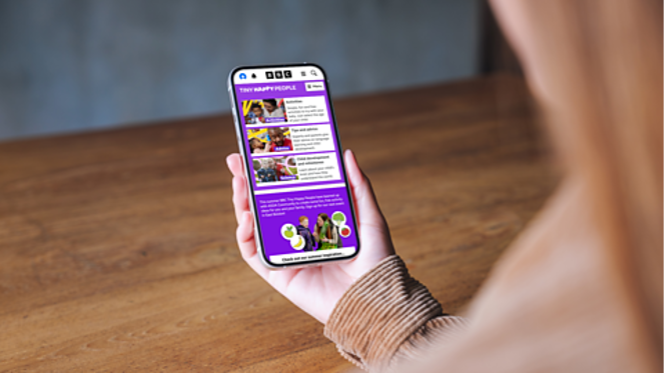
Early Years Alliance is one of the partners supporting BBC CBeebies Parenting, a free online resource supporting parents to develop the language and communication skills of their children aged 0-4. They promote a simple message: talk with children as early as possible, they also have a range of information on parenting topics and child development.
Other useful links to help with the daily challenges of being a parent:
For information on keeping your child safe and healthy, and on safety in the home:
- Visit the Child Accident Prevention Trust website https://capt.org.uk/
- Visit the Family Hubs website Child Safety page
There are a range of helpful articles and advice to help with the challenges of being a parent and keeping children safe and well on the NSPCC website: https://www.nspcc.org.uk/keeping-children-safe/support-for-parents/
Health Visitors are registered nurses or midwives with a specialist qualification in public health. They work with families who have children between the ages of 0 and five. For details about how your health visitor can support you , and a wide range of useful articles and information go to https://myhv.lgt.nhs.uk/
Visit the excellent Families Under Pressure Website and watch some short videos about keeping positive and limiting conflict.
Mindful Mums offers award-winning, free wellbeing groups that help pregnant women and new parents look after their mental and emotional wellbeing during pregnancy and their baby’s first year. For more information: https://selmind.org.uk/mindful-mums/
Help for single parents: https://www.gingerbread.org.uk/
Parenting and mental health: https://www.mind.org.uk/information-support/tips-for-everyday-living/parenting-and-mental-health/